

image from : suryaenergi.co.id
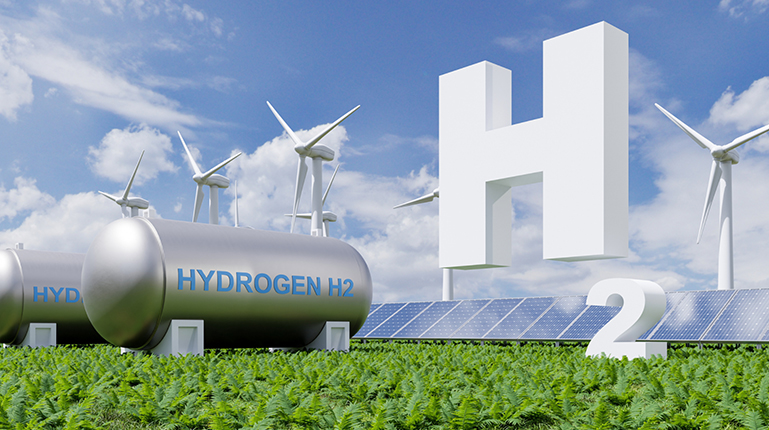
Green hydrogen has rapidly emerged as a key pillar in the energy transition. Produced by splitting water using renewable electricity (electrolysis), it offers a carbon-free alternative for hard-to-decarbonize sectors such as heavy industry, long-haul transport, and chemical manufacturing. However, scaling up green hydrogen globally requires not only production capacity but also robust infrastructure and massive investment. This article examines current trends in production, infrastructure development, and investment, as well as the challenges and opportunities ahead.
1. Production: Where Are We Now
1.1 Scale and Key Projects
-
Current global green hydrogen production is still modest compared to overall hydrogen demand. Most hydrogen today is still “grey” (made from fossil fuels without carbon capture). Global Growth Insights+3expertmarketresearch.com+3IEA+3
-
There are however some large flagship projects underway. For example, the NEOM Green Hydrogen Project in Saudi Arabia is expected to have about 3.9 GW of renewable power (solar and wind) feeding into electrolyzers, producing green hydrogen and AMMONIA for global export. Wikipedia
-
Another is the Fukushima Hydrogen Energy Research Field (FH2R) in Japan: this facility integrates solar power, electrolysis, and hydrogen production, serving as a model for renewable energy-driven hydrogen. Wikipedia
-
The Western Green Energy Hub in Australia is also a key example: enormous wind + solar capacity (tens of GW range) aimed at producing millions of tonnes per year of green hydrogen or green ammonia for both domestic use and export. Wikipedia
1.2 Trends in Production Growth & Cost
-
Electrolyzer capacity is projected to grow steeply in the next few years. Some forecasts suggest global capacities might increase from a few gigawatts currently to tens or even hundreds of gigawatts by 2030. Quick Market Pitch+2Global Growth Insights+2
-
As capacity scales up, costs are falling. In regions with abundant renewables (solar, wind), green hydrogen is moving closer to competitiveness with hydrogen from fossil fuels. Policy incentives, economies of scale, and improved electrolyzer efficiency are key to this. LinkedIn+2Quick Market Pitch+2
2. Infrastructure: Building the Backbone
Green hydrogen production is only part of the story—unless the infrastructure to transport, store, distribute, and convert hydrogen is in place, uptake will remain constrained.
2.1 Key Infrastructure Elements
-
Electrolyzer factories: producing stations/gigs of electrolyzer capacity is crucial. The more capacity for manufacturing electrolysers, the faster and cheaper deployment becomes. Quick Market Pitch+2IEA+2
-
Feed‐in renewable energy supply: green hydrogen requires renewable electricity. Solar PV farms, wind farms (onshore and offshore), as well as supportive grid connections, are essential. Regions with cheap and plentiful renewable resources are advantaged. Global Growth Insights+2P Market Research+2
-
Water supply and purification: electrolysis requires clean water. In many large projects, desalination or water treatment plants are factored in. Otherwise, water scarcity or cost can be a limiting factor. (E.g. India’s Mulapeta project includes a desalination facility.) The Times of India
-
Storage and transport: hydrogen (or hydrogen carriers like ammonia) must be stored and transported. This includes pipelines, shipping, and conversion infrastructure. Some regions are repurposing existing gas pipelines for hydrogen blends or for pure hydrogen transport. P Market Research+1
-
Refueling and end-use infrastructure: for transport (fuel cell vehicles, heavy trucks, ships), you need hydrogen refueling stations. For industry, you may need conversion plants (e.g. ammonia cracking, steel processes using hydrogen). Some pilot hydrogen “cities” are building integrated infrastructure from production to distribution. The Ulsan Green Hydrogen Town in South Korea is one example. Wikipedia
2.2 Infrastructure Growth Projections
-
The global hydrogen infrastructure market (production, storage, distribution, refueling) was valued around USD 5.4 billion in 2023 and is projected to grow to USD 12.76 billion by 2032. That implies a compound annual growth rate (CAGR) of about 10.05%. GlobeNewswire
-
Many countries are planning “hydrogen hubs” or clusters: geographic regions where production, industrial offtakers, transport, and infrastructure are co-located so as to reduce cost and maximize efficiency. Europe, China, India, the U.S., Australia and Middle East actors are major participants. Global Growth Insights+1
3. Investment: Funding the Transition
Scaling up green hydrogen demands vast sums of investment. Below are some of the trends, numbers, and key enablers.
3.1 Investment Volumes & Forecasts
-
In recent years, global investment into low-emission hydrogen (green and other clean hydrogen forms) has grown significantly. There are many announced projects across the pipeline. IEA+2LinkedIn+2
-
According to White Papers and market reports, by 2030, green hydrogen investment could be in the tens of billions annually. Some forecasts suggest that by 2050, the market (supply chain, infrastructure, production) could require trillions of dollars cumulatively. Deloitte+1
3.2 Geographic Patterns
-
Asia-Pacific: major ambitions in China, India, South Korea, etc. China is investing heavily in electrolyzer manufacturing, industrial clusters, and large scale renewables. India has announced policies aiming for large green hydrogen capacity, export focus, and industrial use. Global Growth Insights+2IEA+2
-
Middle East & North Africa (MENA): Saudi Arabia’s NEOM project is a flagship; other sun-rich and wind-rich regions see export potential in green hydrogen or derivatives (like ammonia). Global Growth Insights+1
-
Europe: strong regulatory push, climate targets, hydrogen bank and other subsidy mechanisms. EU aims to decarbonize hard industries and integrate hydrogen infrastructure into industrial zones. GlobeNewswire+1
-
United States: tax credits, hydrogen hubs programs, incentives under the IRA are bolstering investments. LinkedIn+1
3.3 Policy & Financial Instruments
-
Production tax credits (PTCs), subsidies, contract-for-difference (CfD) schemes, guaranteed offtake agreements, feed-in tariffs, renewable energy mandates—all are being deployed in various jurisdictions to reduce investment risk. LinkedIn+1
-
Blended finance structures are emerging: combining public funds & grants with private capital to de-risk first-of-a-kind projects. Development finance institutions (DFIs) are playing a role, especially in emerging markets. IEA+1
4. Challenges & Barriers
For all the promise, there are significant hurdles to overcome.
-
Cost: Although falling, green hydrogen remains expensive relative to fossil-based hydrogen (unless externalities and carbon are priced in). Electrolyzer cost, renewable energy cost, water cost, and system integration contribute.
-
Intermittency & grid issues: Renewable power is often variable. Ensuring high capacity utilization for electrolyzers without huge energy wastage or grid instability is challenging.
-
Water availability & quality: Electrolysis requires purified water. In many regions, sourcing water affordably (and sustainably) is nontrivial.
-
Infrastructure build-out speed: Pipelines, storage, refueling stations, transport infrastructure—these require long lead times, permitting, regulatory alignment.
-
Policy/regulatory risk: Investors need certainty. Frequently, projects are delayed or cancelled due to shifting subsidies, unclear regulations, or lack of long-term demand guarantees. The IEA has noted many hydrogen projects in early stages that may not reach final investment decision. Reuters+1
5. Opportunities & What’s Next
Despite challenges, green hydrogen offers substantial upside. Here are some of the key opportunities going forward.
5.1 Applications in Hard-to-Abate Sectors
-
Steelmaking (direct reduction using hydrogen), chemicals (especially ammonia, methanol), heavy transport (ships, heavy trucks, possibly aviation via synthetic fuels) are major use cases. Decarbonizing these will unlock large demand. expertmarketresearch.com+2IEA+2
5.2 Export Models & Trade Corridors
-
Countries with abundant renewables and inexpensive land (like Australia, parts of the Middle East, North Africa, Latin America) are positioning as exporters of green hydrogen or hydrogen carriers (like ammonia, liquid organic hydrogen carriers). Establishing trade corridors (production → transport → import) will be vital. P Market Research+2GlobeNewswire+2
5.3 Tech Innovation & Cost Reduction
-
Advances in electrolyzer efficiency, new materials, better catalysts, and mass production are expected to reduce costs significantly. Some forecasts expect green hydrogen LCOH (Levelized Cost of Hydrogen) to drop below USD 2/kg in certain favorable markets by late decade. LinkedIn+1
-
Storage innovations (salt caverns, repurposed gas fields), hydrogen carriers, and blending hydrogen into existing infrastructure can also lower overall system costs. IEA+1
5.4 Policy & Investment Enablers
-
Stable, long-term policies (subsidies, mandates, carbon pricing) will help reduce investment risk.
-
Governments and multilateral agencies can support R&D, pilot projects, and first-movers.
-
Agreements for offtake (i.e. buyers commit in advance to purchase hydrogen or its derivatives) help developers secure finance.
-
Public-private partnerships and blended finance are likely to lead the way, especially in emerging economies.
6. Case Studies
-
India: The country has approved multi-billion USD plans to support green hydrogen production, usage, and exports, aiming to become a global hub. It includes both domestic policy support and large projects (e.g. Andhra Pradesh facility for hydrogen/ammonia). AP News+2The Times of India+2
-
Saudi Arabia / NEOM: The NEOM Green Hydrogen Project is a marquee example: large scale, renewable power basis, targeting export markets. Wikipedia
-
Europe / Netherlands: Companies like Air Liquide + TotalEnergies are investing in large electrolyzers (200-250 MW), powered by offshore wind, to serve both industrial customers and to reduce emissions from refineries. Reuters
7. Outlook & Google-Friendly Insights
From a search interest and content optimization perspective:
-
Key terms that are trending include: green hydrogen production, electrolyzer cost, hydrogen infrastructure, green hydrogen investment forecast, export of green ammonia, decarbonizing steel with hydrogen.
-
Audiences are interested in real numbers, projected cost drops, policy announcements, and case studies—especially in recognizable countries.
-
Visuals (charts) showing growth in capacity, comparison of cost per kg over time, maps of hydrogen corridors can increase engagement.
-
FAQs often asked: What is LCOH? What are hydrogen hubs? How long until green hydrogen is cost-competitive? What are the environmental trade-offs (water use, land use)?
8. Conclusion
Global green hydrogen is moving from concept to commercial scale. Production capacity is scaling, infrastructure is being planned and built, and investment is flowing. Yet, to reach its potential—to decarbonize hard sectors, supply clean energy globally, and support net-zero targets—several obstacles remain: cost, infrastructure, regulatory certainty, and demand. Countries and companies that act early, invest wisely, and build robust policies will likely lead this emerging energy revolution.